How to Choose the Right Real-Time Cricket API
Learn how to choose the right cricket API for your application, including live scores, ball-by-ball data, player statistics, fantasy features, API reliability, scalability, and developer-friendly integration.
How to Choose a Real-Time Cricket API for Your Application
Modern cricket applications are increasingly data-driven. A live-score website, mobile sports application, analytics dashboard, or fantasy cricket platform may need constantly changing information throughout a match. Scores, wickets, overs, player performances, commentary, and tournament standings can all change within a short period.
For developers, the challenge is not simply finding cricket data. The real challenge is choosing a cricket API that provides the right data, update frequency, performance, and scalability for the application.
Start With Your Application Requirements
Before selecting an API provider, identify exactly what your application needs.
A basic live-score application may require current runs, wickets, overs, teams, and match status. A more advanced cricket platform could require ball-by-ball commentary, complete scorecards, player statistics, playing XI information, schedules, points tables, and historical data.
Fantasy applications have additional requirements such as player performance information, confirmed playing XI data, and real-time fantasy points.
Creating this list first helps developers avoid paying for datasets or features they do not actually need.
Evaluate Data Freshness
Live sports applications depend heavily on update frequency.
During a cricket match, one delivery can change the score, wickets, player statistics, and match situation. If the application receives outdated information, users may see a different match state from what is happening on the field.
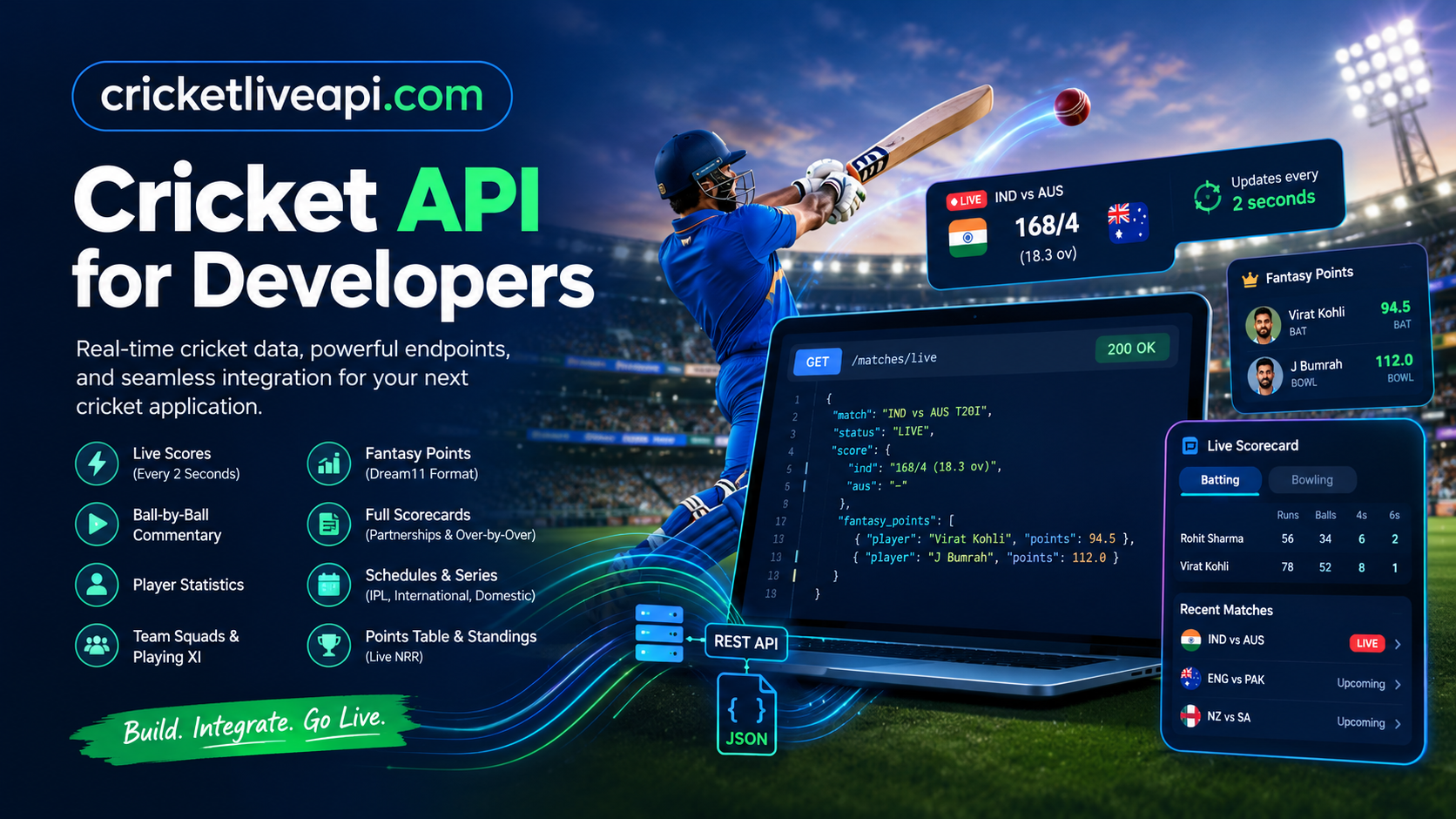
The CricLive API currently advertises live cricket data with a two-second update interval, alongside live scores, ball-by-ball information, commentary, and other cricket datasets.
When comparing providers, developers should understand not only the advertised update interval but also how the API handles delays, interruptions, and match-state changes.
Look Beyond Basic Scores
A good cricket application usually needs more than a scoreboard.
Useful API datasets can include:
- Live match scores
- Ball-by-ball events
- Full batting and bowling scorecards
- Partnerships
- Fall of wickets
- Player statistics
- Recent player form
- Team squads
- Playing XI
- Match schedules
- Series information
- Points tables
- Player and team images
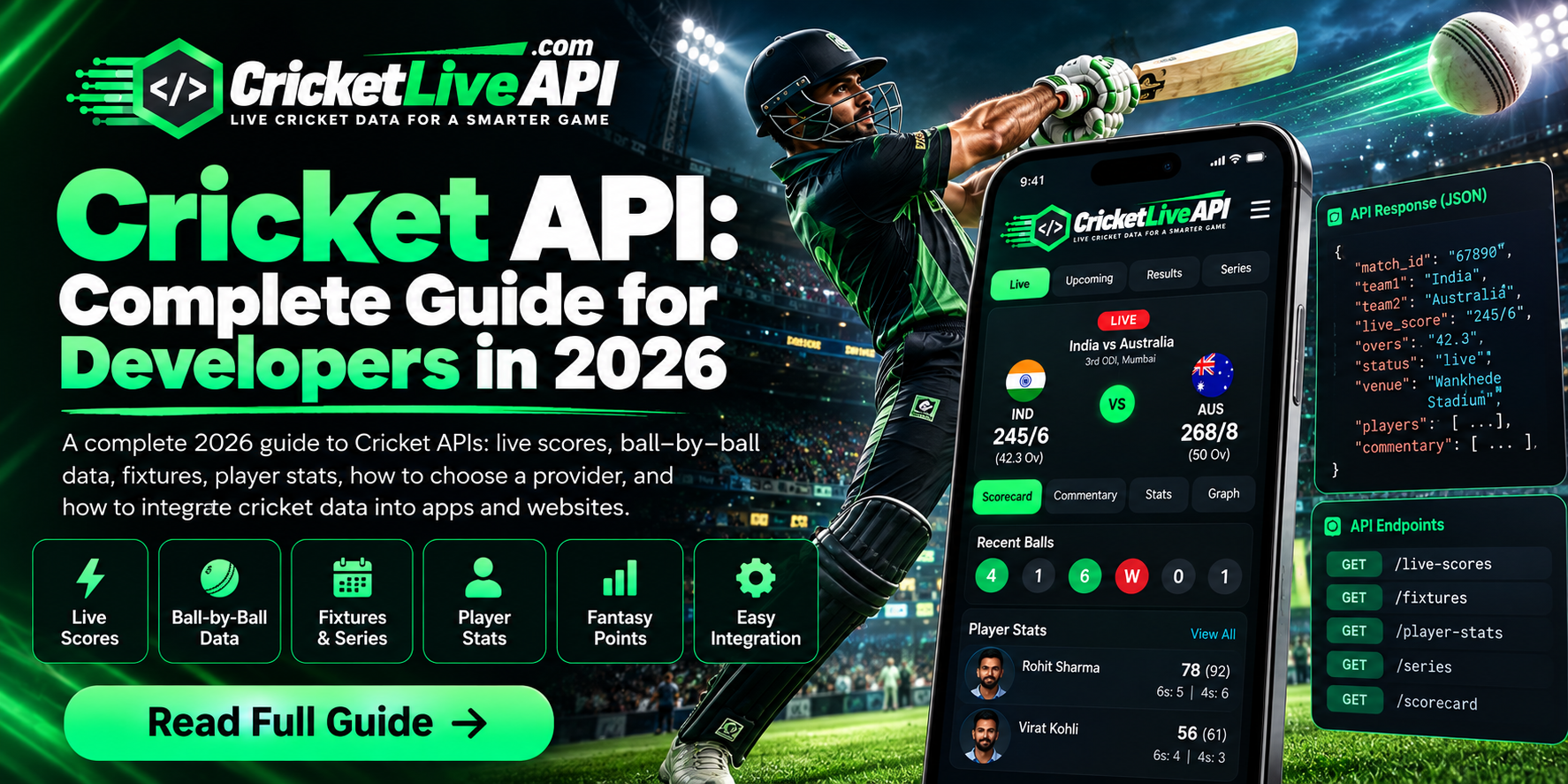
The CricLive API currently lists these categories across its cricket data platform, allowing developers to build different application features around the same data source.
Consider the API Architecture
How the API fits into your application architecture is just as important as the data itself.
A common structure is:
Cricket API → Backend → Cache/Database → Frontend
The backend can handle authentication, transform API responses, cache data, manage errors, and provide the frontend with only the information it needs.
API credentials should generally remain on the server rather than being exposed directly in browser-side code.
Caching is particularly useful when thousands of users are viewing the same match. Instead of sending an identical external request for every user, the backend can retrieve fresh data at controlled intervals and distribute the result.
Check Response Format and Authentication
Developers should look for predictable and well-structured responses.
A REST API returning JSON is generally straightforward to consume with JavaScript, Python, PHP, Java, mobile frameworks, and other common technologies.
Authentication is another important consideration. The CricLive API provides API-key-based access and documents the use of the API key in requests.
Before development begins, verify how keys are created, where they should be stored, and what happens when a key reaches its usage limit.
Rate Limits and Scalability Matter
An API that works perfectly for a prototype may behave differently when an application starts receiving significant traffic.
Developers should examine:
- Requests per minute
- Daily API limits
- Concurrent usage
- Caching requirements
- Error handling
- Upgrade options
- Historical data availability
- Webhook support where required
The CricLive API currently lists different usage levels from a free plan through enterprise-oriented access, with higher limits and additional capabilities available as applications scale.
This type of tiered approach can allow a project to start small and increase capacity as usage grows.
Reliability Is Critical During Major Matches
Traffic patterns for sports applications are unusual. A website may have moderate traffic most of the day and experience a significant increase when an important match begins.
That makes reliability and infrastructure important evaluation criteria.
CricLive API advertises a 99.9% uptime SLA and sub-100 ms average response times on its platform.
Developers should still evaluate these claims against their own requirements and test the API during development before moving into production.
Build for More Than One Feature
One advantage of choosing a comprehensive cricket data source is the ability to expand the application later.
A project might begin with a simple live-score screen and eventually add:
- Detailed scorecards
- Player profiles
- Match commentary
- Fantasy leaderboards
- Tournament standings
- Schedule pages
- Performance analytics
- Match notifications
Having multiple relevant datasets available through the same API can reduce the need to redesign the data architecture whenever a new feature is introduced.
Frequently Asked Questions
1. What is a real-time cricket API?
A real-time cricket API provides live cricket data such as scores, match status, player information, scorecards, and other match-related updates that developers can integrate into websites and applications.
2. What data can developers get from a cricket API?
Depending on the API provider, developers can access live scores, ball-by-ball data, scorecards, player statistics, team information, schedules, series details, points tables, and other cricket-related data.
3. Why is ball-by-ball data important for cricket applications?
Ball-by-ball data allows applications to show detailed match events, including runs, wickets, overs, extras, and delivery information. It can help developers create interactive live match experiences.
4. How do I choose the right cricket API for my project?
Consider data coverage, update frequency, API response speed, documentation, authentication, rate limits, reliability, pricing, and scalability before selecting a cricket API.
5. Can a cricket API be used for mobile and web applications?
Yes. A REST-based cricket API can generally be integrated into web applications, mobile apps, dashboards, fantasy platforms, and other software products using supported programming languages and frameworks.
6. How can developers integrate cricket data into an application?
Developers typically obtain an API key, review the API documentation, send authenticated requests to the required endpoints, process the JSON response, and display the relevant cricket data within their application.
Final Thoughts
Choosing a cricket API should be treated as an architectural decision rather than simply a search for the cheapest data provider.
Developers should compare data coverage, update frequency, response performance, authentication, rate limits, documentation, reliability, and scalability before making a decision.
For applications that need live scores, ball-by-ball events, player statistics, scorecards, fantasy data, schedules, and tournament information, a structured cricket API can provide the underlying data layer while developers focus on the product experience.
The right API should not only solve today's requirements—it should also give the application enough flexibility to grow tomorrow.